class UpdateView
from django.views.generic import UpdateView
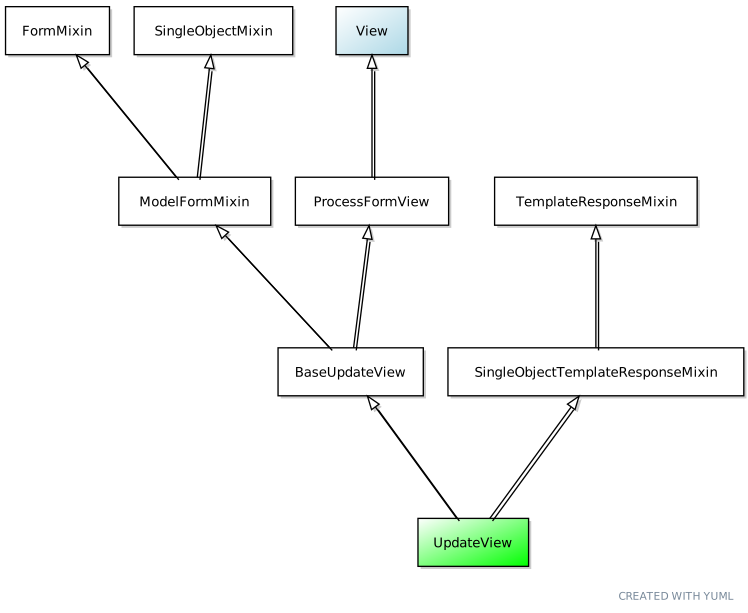
View for updating an object,
with a response rendered by template..
Ancestors (MRO)
Attributes
| Defined in | |
|---|---|
context_object_name = None
|
SingleObjectMixin |
form_class = None
|
FormMixin |
http_method_names = ['get', 'post', 'put', 'delete', 'head', 'options', 'trace']
|
View |
initial = {}
|
FormMixin |
model = None
|
SingleObjectMixin |
pk_url_kwarg = 'pk'
|
SingleObjectMixin |
queryset = None
|
SingleObjectMixin |
response_class = <class 'django.template.response.TemplateResponse'>
|
TemplateResponseMixin |
slug_field = 'slug'
|
SingleObjectMixin |
slug_url_kwarg = 'slug'
|
SingleObjectMixin |
success_url = None
|
FormMixin |
template_name = None
|
TemplateResponseMixin |
template_name_field = None
|
SingleObjectTemplateResponseMixin |
template_name_suffix = '_detail'
|
SingleObjectTemplateResponseMixin |
template_name_suffix = '_form'
|
UpdateView |
Methods
                                    def
                                    __init__(self, **kwargs):
View

def
__init__(self, **kwargs):
View

Constructor. Called in the URLconf; can contain helpful extra
keyword arguments, and other things.
19 20 21 22 23 24 25 26 27 | def __init__(self, **kwargs): """ Constructor. Called in the URLconf; can contain helpful extra keyword arguments, and other things. """ # Go through keyword arguments, and either save their values to our # instance, or raise an error. for key, value in kwargs.iteritems(): setattr(self, key, value) |
                                    def
                                    as_view(cls, **initkwargs):
View

def
as_view(cls, **initkwargs):
View

Main entry point for a request-response process.
29 30 31 32 33 34 35 36 37 38 39 40 41 42 43 44 45 46 47 48 49 50 51 52 53 | @classonlymethod def as_view(cls, **initkwargs): """ Main entry point for a request-response process. """ # sanitize keyword arguments for key in initkwargs: if key in cls.http_method_names: raise TypeError(u"You tried to pass in the %s method name as a " u"keyword argument to %s(). Don't do that." % (key, cls.__name__)) if not hasattr(cls, key): raise TypeError(u"%s() received an invalid keyword %r" % ( cls.__name__, key)) def view(request, *args, **kwargs): self = cls(**initkwargs) if hasattr(self, 'get') and not hasattr(self, 'head'): self.head = self.get return self.dispatch(request, *args, **kwargs) # take name and docstring from class update_wrapper(view, cls, updated=()) # and possible attributes set by decorators # like csrf_exempt from dispatch update_wrapper(view, cls.dispatch, assigned=()) return view |
                                    def
                                    dispatch(self, request, *args, **kwargs):
View

def
dispatch(self, request, *args, **kwargs):
View

58 59 60 61 62 63 64 65 66 67 68 69 | def dispatch(self, request, *args, **kwargs): # Try to dispatch to the right method; if a method doesn't exist, # defer to the error handler. Also defer to the error handler if the # request method isn't on the approved list. if request.method.lower() in self.http_method_names: handler = getattr(self, request.method.lower(), self.http_method_not_allowed) else: handler = self.http_method_not_allowed self.request = request self.args = args self.kwargs = kwargs return handler(request, *args, **kwargs) |
                                    def
                                    form_invalid(self, form):
FormMixin

def
form_invalid(self, form):
FormMixin

62 63 | def form_invalid(self, form): return self.render_to_response(self.get_context_data(form=form)) |
                                    def
                                    form_valid(self, form):

def
form_valid(self, form):

ModelFormMixin
111 112 113 | def form_valid(self, form): self.object = form.save() return super(ModelFormMixin, self).form_valid(form) |
FormMixin
59 60 | def form_valid(self, form): return HttpResponseRedirect(self.get_success_url()) |
                                    def
                                    get(self, request, *args, **kwargs):

def
get(self, request, *args, **kwargs):

BaseUpdateView
189 190 191 | def get(self, request, *args, **kwargs): self.object = self.get_object() return super(BaseUpdateView, self).get(request, *args, **kwargs) |
ProcessFormView
129 130 131 132 | def get(self, request, *args, **kwargs): form_class = self.get_form_class() form = self.get_form(form_class) return self.render_to_response(self.get_context_data(form=form)) |
                                    def
                                    get_context_data(self, **kwargs):

def
get_context_data(self, **kwargs):

ModelFormMixin
115 116 117 118 119 120 121 122 | def get_context_data(self, **kwargs): context = kwargs if self.object: context['object'] = self.object context_object_name = self.get_context_object_name(self.object) if context_object_name: context[context_object_name] = self.object return context |
FormMixin
48 49 | def get_context_data(self, **kwargs): return kwargs |
SingleObjectMixin
88 89 90 91 92 93 | def get_context_data(self, **kwargs): context = kwargs context_object_name = self.get_context_object_name(self.object) if context_object_name: context[context_object_name] = self.object return context |
                                    def
                                    get_context_object_name(self, obj):
SingleObjectMixin

def
get_context_object_name(self, obj):
SingleObjectMixin

Get the name to use for the object.
77 78 79 80 81 82 83 84 85 86 | def get_context_object_name(self, obj): """ Get the name to use for the object. """ if self.context_object_name: return self.context_object_name elif hasattr(obj, '_meta'): return smart_str(obj._meta.object_name.lower()) else: return None |
                                    def
                                    get_form(self, form_class):
FormMixin

def
get_form(self, form_class):
FormMixin

Returns an instance of the form to be used in this view.
30 31 32 33 34 | def get_form(self, form_class): """ Returns an instance of the form to be used in this view. """ return form_class(**self.get_form_kwargs()) |
                                    def
                                    get_form_class(self):

def
get_form_class(self):

ModelFormMixin
Returns the form class to use in this view
71 72 73 74 75 76 77 78 79 80 81 82 83 84 85 86 87 88 89 | def get_form_class(self): """ Returns the form class to use in this view """ if self.form_class: return self.form_class else: if self.model is not None: # If a model has been explicitly provided, use it model = self.model elif hasattr(self, 'object') and self.object is not None: # If this view is operating on a single object, use # the class of that object model = self.object.__class__ else: # Try to get a queryset and extract the model class # from that model = self.get_queryset().model return model_forms.modelform_factory(model) |
FormMixin
Returns the form class to use in this view
24 25 26 27 28 | def get_form_class(self): """ Returns the form class to use in this view """ return self.form_class |
                                    def
                                    get_form_kwargs(self):

def
get_form_kwargs(self):

ModelFormMixin
Returns the keyword arguments for instanciating the form.
91 92 93 94 95 96 97 | def get_form_kwargs(self): """ Returns the keyword arguments for instanciating the form. """ kwargs = super(ModelFormMixin, self).get_form_kwargs() kwargs.update({'instance': self.object}) return kwargs |
FormMixin
Returns the keyword arguments for instanciating the form.
36 37 38 39 40 41 42 43 44 45 46 | def get_form_kwargs(self): """ Returns the keyword arguments for instanciating the form. """ kwargs = {'initial': self.get_initial()} if self.request.method in ('POST', 'PUT'): kwargs.update({ 'data': self.request.POST, 'files': self.request.FILES, }) return kwargs |
                                    def
                                    get_initial(self):
FormMixin

def
get_initial(self):
FormMixin

Returns the initial data to use for forms on this view.
18 19 20 21 22 | def get_initial(self): """ Returns the initial data to use for forms on this view. """ return self.initial.copy() |
                                    def
                                    get_object(self, queryset=None):
SingleObjectMixin

def
get_object(self, queryset=None):
SingleObjectMixin

Returns the object the view is displaying.

By default this requires `self.queryset` and a `pk` or `slug` argument
in the URLconf, but subclasses can override this to return any object.
19 20 21 22 23 24 25 26 27 28 29 30 31 32 33 34 35 36 37 38 39 40 41 42 43 44 45 46 47 48 | def get_object(self, queryset=None): """ Returns the object the view is displaying. By default this requires `self.queryset` and a `pk` or `slug` argument in the URLconf, but subclasses can override this to return any object. """ # Use a custom queryset if provided; this is required for subclasses # like DateDetailView if queryset is None: queryset = self.get_queryset() # Next, try looking up by primary key. pk = self.kwargs.get(self.pk_url_kwarg, None) slug = self.kwargs.get(self.slug_url_kwarg, None) if pk is not None: queryset = queryset.filter(pk=pk) # Next, try looking up by slug. elif slug is not None: slug_field = self.get_slug_field() queryset = queryset.filter(**{slug_field: slug}) # If none of those are defined, it's an error. else: raise AttributeError(u"Generic detail view %s must be called with " u"either an object pk or a slug." % self.__class__.__name__) try: obj = queryset.get() except ObjectDoesNotExist: raise Http404(_(u"No %(verbose_name)s found matching the query") % {'verbose_name': queryset.model._meta.verbose_name}) return obj |
                                    def
                                    get_queryset(self):
SingleObjectMixin

def
get_queryset(self):
SingleObjectMixin

Get the queryset to look an object up against. May not be called if
`get_object` is overridden.
55 56 57 58 59 60 61 62 63 64 65 66 67 68 69 | def get_queryset(self): """ Get the queryset to look an object up against. May not be called if `get_object` is overridden. """ if self.queryset is None: if self.model: return self.model._default_manager.all() else: raise ImproperlyConfigured(u"%(cls)s is missing a queryset. Define " u"%(cls)s.model, %(cls)s.queryset, or override " u"%(cls)s.get_object()." % { 'cls': self.__class__.__name__ }) return self.queryset._clone() |
                                    def
                                    get_slug_field(self):
SingleObjectMixin

def
get_slug_field(self):
SingleObjectMixin

Get the name of a slug field to be used to look up by slug.
71 72 73 74 75 | def get_slug_field(self): """ Get the name of a slug field to be used to look up by slug. """ return self.slug_field |
                                    def
                                    get_success_url(self):

def
get_success_url(self):

ModelFormMixin
99 100 101 102 103 104 105 106 107 108 109 | def get_success_url(self): if self.success_url: url = self.success_url % self.object.__dict__ else: try: url = self.object.get_absolute_url() except AttributeError: raise ImproperlyConfigured( "No URL to redirect to. Either provide a url or define" " a get_absolute_url method on the Model.") return url |
FormMixin
51 52 53 54 55 56 57 | def get_success_url(self): if self.success_url: url = self.success_url else: raise ImproperlyConfigured( "No URL to redirect to. Provide a success_url.") return url |
                                    def
                                    get_template_names(self):

def
get_template_names(self):

SingleObjectTemplateResponseMixin
Return a list of template names to be used for the request. Must return
a list. May not be called if get_template is overridden.
107 108 109 110 111 112 113 114 115 116 117 118 119 120 121 122 123 124 125 126 127 128 129 130 131 132 133 134 135 136 137 138 139 | def get_template_names(self): """ Return a list of template names to be used for the request. Must return a list. May not be called if get_template is overridden. """ try: names = super(SingleObjectTemplateResponseMixin, self).get_template_names() except ImproperlyConfigured: # If template_name isn't specified, it's not a problem -- # we just start with an empty list. names = [] # If self.template_name_field is set, grab the value of the field # of that name from the object; this is the most specific template # name, if given. if self.object and self.template_name_field: name = getattr(self.object, self.template_name_field, None) if name: names.insert(0, name) # The least-specific option is the default <app>/<model>_detail.html; # only use this if the object in question is a model. if hasattr(self.object, '_meta'): names.append("%s/%s%s.html" % ( self.object._meta.app_label, self.object._meta.object_name.lower(), self.template_name_suffix )) elif hasattr(self, 'model') and hasattr(self.model, '_meta'): names.append("%s/%s%s.html" % ( self.model._meta.app_label, self.model._meta.object_name.lower(), self.template_name_suffix )) return names |
TemplateResponseMixin
Returns a list of template names to be used for the request. Must return
a list. May not be called if render_to_response is overridden.
100 101 102 103 104 105 106 107 108 109 110 | def get_template_names(self): """ Returns a list of template names to be used for the request. Must return a list. May not be called if render_to_response is overridden. """ if self.template_name is None: raise ImproperlyConfigured( "TemplateResponseMixin requires either a definition of " "'template_name' or an implementation of 'get_template_names()'") else: return [self.template_name] |
                                    def
                                    http_method_not_allowed(self, request, *args, **kwargs):
View

def
http_method_not_allowed(self, request, *args, **kwargs):
View

71 72 73 74 75 76 77 78 79 | def http_method_not_allowed(self, request, *args, **kwargs): allowed_methods = [m for m in self.http_method_names if hasattr(self, m)] logger.warning('Method Not Allowed (%s): %s', request.method, request.path, extra={ 'status_code': 405, 'request': self.request } ) return http.HttpResponseNotAllowed(allowed_methods) |
                                    def
                                    post(self, request, *args, **kwargs):

def
post(self, request, *args, **kwargs):

BaseUpdateView
193 194 195 | def post(self, request, *args, **kwargs): self.object = self.get_object() return super(BaseUpdateView, self).post(request, *args, **kwargs) |
ProcessFormView
134 135 136 137 138 139 140 | def post(self, request, *args, **kwargs): form_class = self.get_form_class() form = self.get_form(form_class) if form.is_valid(): return self.form_valid(form) else: return self.form_invalid(form) |
                                    def
                                    put(self, *args, **kwargs):
ProcessFormView

def
put(self, *args, **kwargs):
ProcessFormView

144 145 | def put(self, *args, **kwargs): return self.post(*args, **kwargs) |
                                    def
                                    render_to_response(self, context, **response_kwargs):
TemplateResponseMixin

def
render_to_response(self, context, **response_kwargs):
TemplateResponseMixin

Returns a response with a template rendered with the given context.
89 90 91 92 93 94 95 96 97 98 | def render_to_response(self, context, **response_kwargs): """ Returns a response with a template rendered with the given context. """ return self.response_class( request = self.request, template = self.get_template_names(), context = context, **response_kwargs ) |